Can my electric car power my house during a power outage?
Short answer
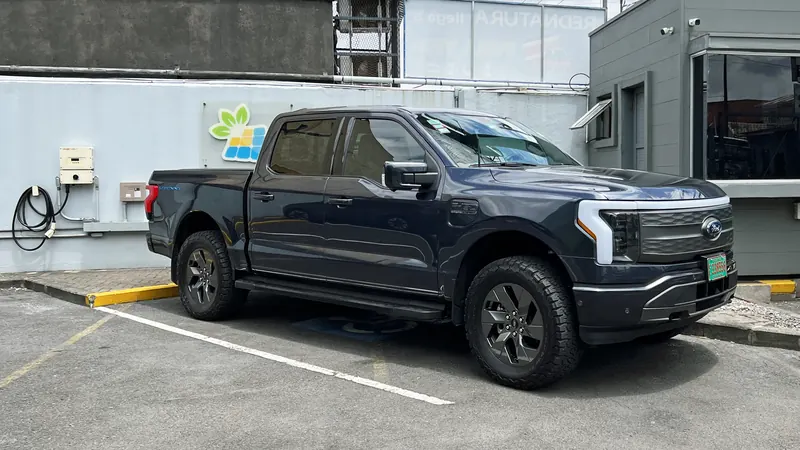
Some EVs can, but only with the automaker's approved equipment: a bidirectional charger plus a gateway or transfer unit that isolates your home from the grid. Official US programs cover the Ford F-150 Lightning, many GM EVs, Tesla Cybertruck and some Model 3 and Model Y, and the Kia EV9. Other EVs can only run appliances through their own outlets.

Key takeaways
- Only specific vehicles can back up a house, and only with the automaker's approved bidirectional charger plus isolation equipment. The car alone won't do it.
- Officially supported today: Ford F-150 Lightning (2022–2025), many 2024–2027 GM EVs with the GM Energy V2H Bundle, Tesla Cybertruck via Powershare (and some Model 3/Y with Powerwall), and 2024–2025 Kia EV9 with Wallbox Quasar 2 plus its Power Recovery Unit.
- Automakers' own estimates assume about 30 kWh a day of home use: Ford says up to three days for a full-home Lightning setup with the extended-range battery, and Tesla says over three days for Cybertruck.
- V2L (the car's outlets plus cords) needs no home wiring. Connecting a car to house circuits always needs listed transfer equipment, a licensed installer, and sometimes utility approval.
V2H vs V2L: two very different things
V2L (vehicle-to-load) means the car's own outlets, in the bed, the cabin or through a charge-port adapter, power appliances through cords. Nothing touches your house wiring. V2H (vehicle-to-home) means the car feeds your home panel through a bidirectional charger and isolation equipment that disconnects the house from the grid first. That isolation is what prevents backfeed onto utility lines, the same danger covered in our guide to connecting a power station to your panel.
Which vehicles officially support home backup, and what each needs
| Vehicle (per the automaker) | Required equipment | Backup power and duration claimed |
|---|---|---|
| Ford F-150 Lightning, 2022–2025, all trims | Ford Charge Station Pro + Home Integration System from Sunrun. Standard-range trucks need a one-time $500 software activation. | Up to 9.6 kW. "Full-home power for up to three days" with the extended-range battery, up to 10 days rationed (Ford estimate at 30 kWh/day). |
| GM: 2024–2026 Chevrolet Silverado EV, Blazer EV, Equinox EV, GMC Sierra EV, Cadillac LYRIQ; 2025–2026 Cadillac ESCALADE IQ and OPTIQ; 2026 Cadillac VISTIQ and CELESTIQ, GMC Hummer EV SUV and SUT; 2027 Chevrolet Bolt EV | GM Energy V2H Bundle: PowerShift Charger + V2H Enablement Kit (Home Hub, inverter, Dark Start battery). GM notes some vehicles need a software update. | Inverter backup power listed at 9.6 kW. GM gives no fixed duration and warns that "power supply may be interrupted." |
| Tesla Cybertruck, all trims | Powershare Gateway + Universal Wall Connector (a Backup Switch can lower cost in some cases) | Up to 11.5 kW. "Over three days" (Tesla estimate at 30 kWh/day, 90% charge). |
| Tesla Model 3 / Model Y (capable units) | An existing Powerwall + Universal Wall Connector or Wall Connector 3. Tesla says all US orders after October 1, 2026 are Powershare-capable. For earlier cars, check "Powershare Support" in the vehicle's software screen. | Extends Powerwall backup: up to two days or over two days depending on trim (Tesla estimates) |
| Kia EV9, 2024–2025 (Kia says 2025–2026 EV6 and 2026 EV9 are expected in late 2026) | Wallbox Quasar 2 bidirectional charger, plus the separately sold Wallbox Power Recovery Unit for outage backup. Kia requires a 100 A or larger panel; Wallbox says backup requires home service of no more than 200 A. | Wallbox estimates over three days at 25 kWh/day. Kia stops discharge at 20% battery. |
Not yet on the list: Hyundai Motor Group said in November 2025 it would launch US V2H "in the near term," with Hyundai starting with the IONIQ 9. We did not find an official US activation page for it at the time of review, so treat it as announced, not available.
Things that change between brands
- Availability of the hardware. Ford's support page now says the Charge Station Pro "is no longer for sale." That matters if you're buying a used Lightning for its backup feature. Sunrun's FAQ adds that it's the only charger that pairs with the Home Integration System.
- Mixing brands. GM says its V2H Bundle "is not compatible with battery systems from other manufacturers." Ford says Home Backup Power can't be used with a competitor's solar or battery setup. Tesla says to install a Powerwall first if you plan one, to avoid extra electrical work.
- Where the gear can live. Kia requires the V2H charger and equipment in a residential garage or carport with shade and ventilation.
- Permits and the utility. Kia notes that some jurisdictions may not allow bidirectional charging, or may require a permit and utility approval. Ford's essential-backup option is likewise "subject to local utility provider approval."
- Medical equipment. GM specifically says its V2H setup is not recommended for powering medical devices.
The lower-cost Ford option: Pro Power Onboard + GenerLink
Ford also supports a partial-home route for F-150 Lightning and F-150 PowerBoost hybrids with 7.2 kW or 9.6 kW Pro Power Onboard. A professionally installed GenerLink transfer switch at the meter, a GenerLok cord and the Ford Vehicle Connector link the truck's 240 V bed outlet to the house. Ford rates the output at 7.2 kW continuous (9.3 kW peak for up to 2 seconds) and says to stagger big appliances. It estimates that a Lightning can run an average home this way for up to 2 days with the Standard Range battery and up to 3 days with the Extended Range battery. This is V2L feeding a transfer switch, not bidirectional charging, but it still connects to house wiring, so the same professional-install and utility-approval rules apply.
How long will my EV run my house?
Use the automakers' own assumptions as a starting point, not a promise. Ford and Tesla both base their figures on about 30 kWh a day, which Ford ties to the EIA's 899 kWh-per-month average. Wallbox uses 25 kWh a day. Your number depends on heating and cooling, the charge you start with, and the reserve you set. Kia stops at 20%, and Ford and Tesla let you keep a driving reserve. Cutting back to essentials is what turns "about three days" into "a week."
Installing the charger
V2H chargers are high-current units. GM's PowerShift Charger, for example, is rated up to 80 A for charging, double the 40 A a plug-in charger can draw from a NEMA 14-50 outlet, so a unit like that has to be hardwired. Our sister site explains the circuit-sizing basics in NEMA 14-50 vs hardwired EV chargers. For V2H, though, the isolation equipment and the utility paperwork are the bigger part of the job, so get the automaker's installer or a licensed electrician who has done that brand's system before.
Not sure an EV is the right backup? Compare it with the alternatives in home battery vs generator.
Frequently asked questions
Can any electric car power a house?
No. Only vehicles with official V2H support, used with the automaker's approved bidirectional charger and isolation equipment, can back up a house. Other EVs can run a few appliances through their own outlets (V2L).
What do I need for Ford F-150 Lightning home backup?
A Ford Charge Station Pro and the Home Integration System from Sunrun, plus a $500 activation for standard-range trucks. Ford says the Charge Station Pro is no longer for sale.
Which GM EVs support vehicle-to-home?
GM lists 2024–2026 Chevrolet Silverado EV, Blazer EV, Equinox EV, GMC Sierra EV and Cadillac LYRIQ, plus newer Cadillac, GMC Hummer EV and 2027 Bolt EV models, with the GM Energy V2H Bundle.
How long can an EV power a house?
Automaker estimates assume about 30 kWh a day: Ford says up to three days for a full-home F-150 Lightning setup with the extended-range battery, and Tesla says over three days for Cybertruck. Actual time depends on your usage and charge level.
What is the difference between V2L and V2H?
V2L uses the car's own outlets and cords to run appliances, with no house wiring involved. V2H feeds your home panel through a bidirectional charger and isolation equipment that disconnects the house from the grid.
Sources
- Ford: What is Ford Home Backup Power?
- Sunrun: Ford F-150 Lightning Home Integration System
- GM Energy: V2H-capable GM EVs
- GM Energy: V2H Bundle (equipment and specs)
- Tesla: Powershare support page
- Kia: Vehicle-to-home with Wallbox
- Kia Connect Store: Vehicle to Home (eligibility and FAQ)
- Kia America press release: V2H arrives for eligible EV9 drivers (March 4, 2025)
- Wallbox: Quasar 2 bidirectional charger
- Hyundai Motor Group: expanding V2G and V2H services (November 28, 2025)