Is a home battery or a generator better for backup power, and what does each cost?
Short answer
For short, occasional outages, especially with solar, a home battery is quieter and needs no fuel. For multi-day outages or heavy loads like central air, a standby generator is more dependable. Installed costs overlap: Generac estimates $8,000 to $16,000, and EnergySage's typical Powerwall 3 price is $13,473. The federal battery credit ended after 2025.
.jpg)
Key takeaways
- Generac puts a typical home standby generator install at $8,000 to $16,000 including the generator. EnergySage's typical installed price for a Tesla Powerwall 3 is $13,473 before incentives (both estimates).
- The federal 25D credit, which covered home battery storage, ended for expenditures made after December 31, 2025, and the IRS counts the expenditure when installation is completed.
- One 13.5 kWh battery runs an average-use home for roughly 11 hours with no solar (estimate). A generator runs as long as it has fuel: Generac lists 2.53 gal/h of propane for its 22 kW unit at half load.
- Portable generators must run outdoors. The CDC says never inside a home or garage, even with doors and windows open, and only more than 20 feet from any window, door or vent.
What each costs, installed (estimates)
| Option | Installed cost estimate | Source and what it includes |
|---|---|---|
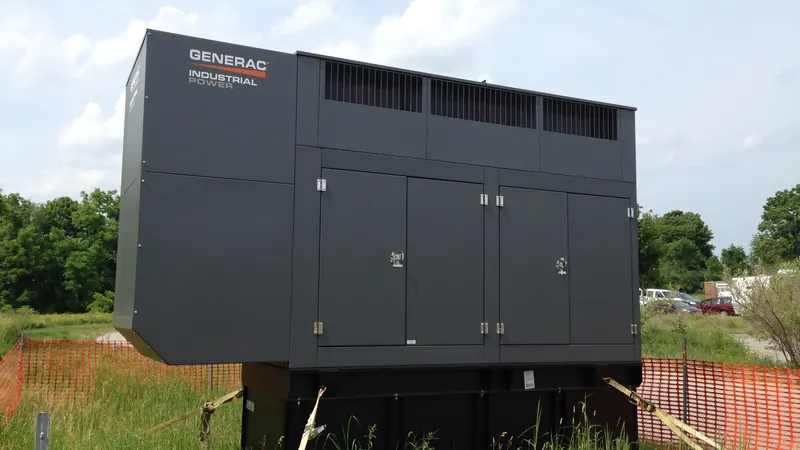
| Home standby generator | $8,000 to $16,000 | Generac: average installation range "including the generator itself" |
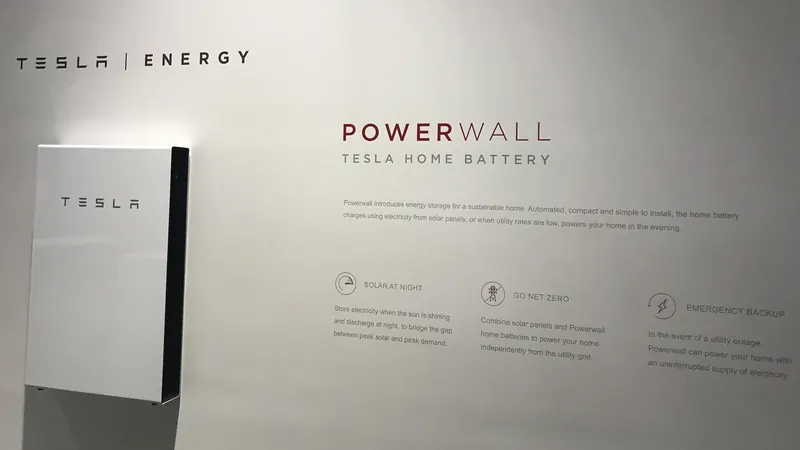
| Tesla Powerwall 3 (13.5 kWh) | $13,473 typical; $998 per kWh | EnergySage marketplace quotes, before incentives |
| Typical home battery (13.5 kWh) | $15,647 | EnergySage average, before incentives |
These are national figures, and they move with your house. In EnergySage's own state table, the same 13.5 kWh system is $7,601 in Alabama and $18,252 in Massachusetts. Generac says generator installs cost less the closer the site is to the gas line and the electric meter. Get at least two quotes for whichever route you pick.
The tax credit change for batteries
Through 2025, battery storage technology was a qualified expense under the federal residential clean energy credit (section 25D). The IRS's FAQ on Public Law 119-21 is explicit that 25D "will not be allowed for any expenditures made after December 31, 2025." It also answers the obvious follow-up: paying in 2025 doesn't help if the battery was installed in 2026, because an expenditure is treated as made "when the original installation of the item is completed." So in 2026 a battery and a generator compete on price without a federal credit tipping the scale. Check your state and utility for local programs.
How long each one keeps you running
Battery: runtime is capacity divided by load. EnergySage lists the Powerwall 3 at 13.5 kWh usable and 11.5 kW continuous. The EIA says the average US residential customer bought 10,791 kWh in 2022, about 899 kWh a month. That works out to roughly 29.6 kWh a day, or an average draw of about 1.23 kW. At that average, one Powerwall 3 lasts about 11 hours (13.5 ÷ 1.23). Cut back to essentials, say 0.5 kW, and it's about 27 hours. Both are estimates before losses and with no solar recharging. Solar can refill a battery during the day, which is why batteries make the most sense paired with panels.
Generator: runtime is limited only by fuel. Generac's spec sheet for its 22 kW Guardian lists propane use of 2.53 gallons per hour at half load and 3.90 at full load. Every 100 gallons of propane is therefore about 40 hours at half load (100 ÷ 2.53), an estimate. On natural gas (228 cubic feet per hour at half load), it runs as long as the utility gas supply keeps flowing. Note the fuel derate: the same unit is rated 22,000 W on propane but 19,500 W on natural gas.
How long outages actually last
The EIA reports that US customers averaged 11 hours of interruptions in 2024, nearly twice the average of the decade before. Major events such as Hurricanes Beryl, Helene and Milton accounted for 80% of those hours. Interruptions that aren't caused by major events "routinely average about two hours per year." That split is the real decision. A battery covers the common short outage easily. The rare multi-day storm is where fuel-based generation earns its keep.
Fuel, maintenance and noise
| Standby generator (Generac 22 kW spec) | Home battery (Powerwall 3, per EnergySage) | |
|---|---|---|
| Fuel | Natural gas or propane. Propane needs a tank you keep filled. | None. Recharges from the grid or solar. |
| Routine upkeep | Oil changes at up to a 2-year/200-hour interval; a short programmed exercise run (5 minutes, weekly, bi-weekly or monthly); a 12 V starting battery; an oil warmer is recommended if it's regularly below 0 °F | No engine to service |
| Noise | 67 dB(A) at 23 ft at normal load; 57 dB(A) during the low-speed exercise | No engine noise |
| Warranty | See the model's warranty terms | 10 years, 70% capacity retention |
| Power at once | 19,500 W (natural gas) to 22,000 W (propane) | 11.5 kW continuous per unit |

Carbon monoxide: the risk that only generators carry
Fuel-burning generators produce carbon monoxide, which you can't see or smell. The CDC's rules for portable generators are specific. Never use one inside your home or garage, even if doors and windows are open. Only use it outside, more than 20 feet from any windows, doors and vents, and use a battery-powered or battery-backup CO detector inside. The CPSC adds: never run one in a basement, crawlspace, shed or on a porch either. Run portable generators outside only, at least 20 feet from the house, with the exhaust pointed away from the home. Put CO alarms outside sleeping areas and on each floor, and test them monthly. The CPSC also suggests asking for a portable generator with automatic CO shut-off. A permanently installed standby unit goes where the dealer and code put it. Generac describes the dealer choosing a stable, well-drained site during the consultation. Even so, a working CO alarm is still worth having.
Batteries have their own installation rules and should be installed by a qualified installer, but there's no exhaust.
Which is better for you
- Short, occasional outages, and you have or want solar: battery.
- Multi-day outages, rural lines, or well water: generator, or a battery plus a generator for long events.
- You want central air or electric heat during an outage: compare the kW figures. A 22 kW generator delivers more at once than one 11.5 kW battery.
- HOA, noise limits or no gas service: battery.
- Smaller budget: a portable power station or portable generator with a transfer switch or interlock covers essentials for less. See connecting a power station to your panel.
If you have an EV, it may double as a home battery. See can an EV power your house.
Frequently asked questions
Is a home battery cheaper than a generator?
Not usually by much. Generac puts a typical standby generator install at $8,000 to $16,000, and EnergySage's typical installed price for a Tesla Powerwall 3 is $13,473 before incentives. Both are estimates.
Is there still a federal tax credit for home batteries in 2026?
No. The IRS says the 25D residential clean energy credit, which covered battery storage, is not allowed for expenditures made after December 31, 2025, and an expenditure counts when installation is completed.
How long will a home battery power my house?
Divide capacity by load. At the EIA's average of about 1.23 kW, a 13.5 kWh Powerwall 3 lasts roughly 11 hours without solar. Essentials only at 0.5 kW, it's about 27 hours. Both are estimates.
How far from the house should a generator be?
For portable generators, the CDC says never inside a home or garage, and only outside, more than 20 feet from any windows, doors and vents. The CPSC says at least 20 feet from the house, with the exhaust pointed away.
How long do power outages usually last?
The EIA reports an average of 11 hours of interruptions per customer in 2024, with 80% caused by major events like hurricanes. Interruptions outside major events routinely average about two hours a year.
Sources
- Generac: backup generator installation (consultation, siting, cost range)
- Generac: 16/20/22 kW Guardian standby generator spec sheet (fuel use, sound, maintenance)
- EnergySage: Tesla Powerwall 3 review (price, specs, warranty)
- EnergySage: How much do solar batteries cost?
- IRS: FAQs on modification of 25C, 25D, 25E, 30C, 30D, 45L, 45W and 179D under Public Law 119-21
- IRS: Residential clean energy credit (battery storage as a qualified expense)
- EIA: How much electricity does an American home use?
- EIA: Hurricanes in 2024 led to the most hours without power in 10 years
- CDC: Carbon monoxide poisoning basics (portable generators)
- CPSC: Generators and carbon monoxide (safety sheet)
- OSHA: Using Portable Generators Safely (OSHA 3286)